Listen to this article.
Drama Review: Legend of Dugu (2018)
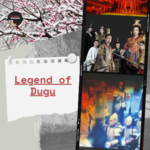
Legend of Dugu (Chinese: Dugu Qiang) is a captivating Chinese historical drama that revolves around the lives of the Dugu family during the late Eastern Han Dynasty and the Three Kingdoms period. The drama, based on Jin Yong’s The Dugu Family novel, intricately weaves themes of ambition, love, power, and sacrifice, particularly through the lens of the three Dugu sisters—Dugu Qiuji, Dugu Qiu’er (Jialou), and Dugu Qiuhe. The series masterfully explores how ambition intertwines with personal desires, emotional connections, and familial bonds, ultimately painting a portrait of love and loyalty against a backdrop of political intrigue.
The Ambitions of the Three Sisters: Love and Power
Each of the Dugu sisters possesses distinct ambitions, and their love stories are deeply intertwined with these desires. As they navigate the complex world of the Three Kingdoms, their love styles evolve, reflecting both their ambitions and their eventual obsessions.
Dugu Qiuji: Love and Duty Collide
Dugu Qiuji, the eldest sister, portrayed by Zhao Liying, is the most politically ambitious of the three. Her ambition is rooted in a desire to protect her family and uphold her father’s legacy. However, this drive for power and justice often comes at the cost of her personal desires. Her love style is deeply linked to duty—she seeks a relationship where love is often overshadowed by her commitment to her family’s legacy. For Qiuji, love is a form of loyalty, where every decision is weighed against her personal ambitions and responsibilities.
Her love story is tragic yet poignant, as her intense commitment to her ambitions often leads her to make difficult sacrifices in her relationships. Qiuji’s evolving love is an extension of her obsessive pursuit of power and the survival of her family. As she grows more focused on fulfilling her role, her emotional connections are tested, and she faces the complex tension between personal happiness and family duty. This reflects the core theme of the drama—ambition can often cloud one’s capacity to love freely.
Dugu Qiu’er (Jialou): Love as Protection
The second sister, Dugu Qiu’er (also known as Jialou, played by Chen Xingxu), has a unique approach to love. She is driven by a protective, almost nurturing instinct, both for her family and for the people she cares about. While Qiu’er’s ambition is less politically aggressive than Qiuji’s, she is determined to safeguard her family’s future, often using her relationships to secure stability.
Qiu’er’s love is characterized by a deep emotional attachment and protective nature, where her ambition for security and control over her family’s fate influences her romantic choices. Her love is selfless, but at times, her desires for protection evolve into an obsession with maintaining power and order. She forms connections that help her achieve her ambitions, yet these relationships also reveal how her protective instincts may inadvertently limit her ability to experience genuine emotional freedom.
Throughout the series, Qiu’er grapples with the balance between love as an expression of vulnerability and her obsession with control. In her love story, it becomes clear that while her ambition is rooted in a desire to protect, the emotional consequences of her attachment often lead to tension and sacrifice, mirroring the destructive potential of obsession.
Dugu Qiuhe: Innocence and Hope
The youngest sister, Dugu Qiuhe, portrayed by Wang Luodan, presents a different approach to love—one driven by innocence, longing, and emotional fulfillment. Her ambition, in contrast to her older sisters, is less focused on power or political achievement, and more on personal happiness. Qiuhe’s love is pure, rooted in a desire for connection and emotional intimacy.
Her love style reflects a romantic idealism that initially contrasts sharply with the harsher realities of the world around her. Despite the political chaos and familial obligations, Qiuhe desires genuine affection and happiness. However, her idealism leads her to face emotional disillusionment, as she begins to realize that love and happiness often come with compromises. The emotional complexities she faces are a result of her realization that love cannot be divorced from ambition—especially in a world where family duty and political struggles require constant sacrifices.
Qiuhe’s journey is a poignant exploration of how the pursuit of love can become entangled with the desire for security and fulfillment. Her ambition to experience true emotional connection leads her down a path that challenges her idealistic beliefs, forcing her to confront the reality that true love often demands more than just emotional availability.
Ambition vs. Obsession: The Dugu Sisters’ Tragic Choices
The central theme in Legend of Dugu revolves around the duality of ambition—its ability to inspire greatness, yet also its capacity to destroy. The three Dugu sisters each grapple with their personal ambitions and their relationships with love, leading them to make difficult choices. As their love stories intertwine with their ambitions, each sister faces the risk of obsession, where their desires begin to eclipse the other parts of their lives.
For Qiuji, her ambition leads her to an obsessive pursuit of power and legacy, causing her to neglect the very relationships she cherishes most. For Qiu’er, the need for security and protection turns her love into a means of control, reflecting her increasing need for stability at all costs. Qiuhe, on the other hand, experiences the harsh reality of love, realizing that the innocence with which she approached her feelings may not be enough to shield her from the complexities of life and love.
As the sisters’ paths unfold, their romantic relationships reveal the delicate balance between ambition and obsession. Each of them must confront the consequences of putting their ambitions above their hearts, and ultimately, the series portrays how ambition, when unchecked, can erode even the deepest of emotional connections. But equally, it hints that the sisters’ ability to recognize their flaws and seek redemption can offer them the chance to heal and find hope.
A Glimpse of Hope
While Legend of Dugu showcases the often tragic consequences of unchecked ambition, it also offers a glimpse of hope. The love stories of the three Dugu sisters are not entirely defined by their sacrifices and struggles. Throughout the series, there are moments of reflection and growth, where the characters recognize the importance of balance in both ambition and love.
Though the series is marked by personal losses, political turmoil, and the emotional fallout of obsession, it suggests that there is always room for healing and redemption. The journey towards a balanced life—where ambition does not overshadow love—is one of self-discovery. By the end of their individual stories, the Dugu sisters are given the possibility of change, offering a hopeful note that even the most consuming obsessions can be overcome with self-awareness and the desire to restore what truly matters.
Conclusion
Legend of Dugu is a poignant exploration of ambition, obsession, and love, woven through the lives of the three Dugu sisters. Their love stories—defined by selflessness, protection, and idealism—are inseparable from their ambitions. The drama offers a rich tapestry of emotions, showing how ambition can inspire greatness but also blind one to the emotional costs of such pursuits. The three sisters’ journeys are a powerful reflection of the fine line between ambition and obsession, and the dramatic impact it has on their relationships.
In the end, Legend of Dugu is not just a historical epic but a reminder that while ambition can lead to great achievements, the path toward true fulfillment requires balance, introspection, and the willingness to prioritize love over the pursuit of power. The drama offers a glimmer of hope that even in a world defined by ambition and obsession, there is always room for redemption, reconciliation, and the possibility of genuine emotional connections.